3D Business Schedule Pack: Elevating Digital Project Visuals
In the rapidly evolving landscape of digital design, the gap between abstract concepts and tangible user experiences is often bridged by high-quality visual assets. For UX UI designers, web developers, and mobile app creators, the challenge lies not just in functionality, but in communication. How do you convey the complexity of a business workflow or the sleekness of a new application interface to stakeholders who may not speak the language of code? The answer increasingly lies in sophisticated 3D visualization. This is where the 3D Business Schedule Pack emerges as a vital resource, offering a curated collection of assets designed to streamline the creative process while enhancing the aesthetic appeal of professional projects.
The Evolution of Visual Communication in Web Design
Traditionally, business websites relied heavily on stock photography and flat iconography to represent concepts like time management, scheduling, and productivity. While functional, these two-dimensional elements often fail to capture the depth and dynamism of modern digital interactions. As user expectations rise, so does the demand for immersive visuals that feel tactile and engaging. A 3D Illustration of business schedule is no longer just a decorative choice; it is a strategic tool for improving user engagement and comprehension.
The shift toward three-dimensional elements in UX UI design reflects a broader trend toward realism and spatial awareness in digital interfaces. By incorporating 3D objects, designers can create hierarchies that guide the user’s eye more effectively than flat designs alone. The 3D Business Schedule Pack addresses this need by providing ready-to-use, high-fidelity 3D models that are specifically tailored for business contexts. These assets allow creators to bypass the time-consuming process of modeling from scratch, enabling them to focus on integration and user experience rather than foundational asset creation.
Unpacking the 3D Business Schedule Pack
At its core, this pack is a comprehensive toolkit designed for versatility and ease of use. It is not merely a collection of images but a robust set of source files that empower designers to customize visuals according to their specific brand guidelines. Understanding what is included is essential for evaluating its suitability for your next project.
Comprehensive File Formats and Compatibility
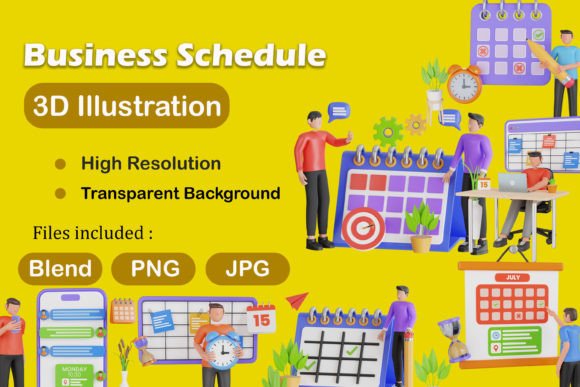
One of the standout features of the 3D Business Schedule Pack is its compatibility with industry-standard software. The package includes:
- 10 3D Blender Files: These are the native source files, allowing users with Blender software to modify lighting, textures, camera angles, and composition. This level of control is crucial for designers who need a specific look that matches their existing design system.
- 10 High-Resolution JPGs: Perfect for quick implementation in presentations, mood boards, or web banners where editing is not required.
- 10 PNGs with Transparency: These files are invaluable for web designers and app developers, as they can be layered directly over backgrounds without the need for complex masking or background removal.
All images are rendered at a high resolution of 3000x2000 pixels, ensuring clarity and sharpness across various devices, from large desktop monitors to high-density mobile screens. This attention to detail ensures that the visuals remain crisp, maintaining professional quality regardless of the display context.
Design Aesthetics and Theme Alignment
The visual style of the 3D Illustration of business schedule contained within this pack is carefully crafted to align with contemporary design trends. The themes cover essential aspects of the modern digital economy, including:
- Business Website Elements: Clean, professional layouts that convey trust and efficiency.
- Web Investment Concepts: Visual metaphors for growth, analytics, and financial planning.
- UX UI Design Components: Abstract representations of user flows, interface layers, and interaction points.
- Application Development: Icons and scenes that depict coding, deployment, and mobile connectivity.
This thematic diversity ensures that the pack is not limited to a single niche. Whether you are designing a fintech dashboard, a project management tool, or a corporate landing page, there is likely an asset within the pack that resonates with your content.
Practical Applications for Professionals
Who stands to benefit most from integrating the 3D Business Schedule Pack into their workflow? The utility of these assets extends across several professional domains, each leveraging the 3D elements to solve specific communication challenges.
For UX UI Designers
User Experience (UX) and User Interface (UI) designers are constantly seeking ways to reduce cognitive load while increasing visual interest. 3D illustrations can serve as focal points that break up text-heavy sections, making information more digestible. For instance, a 3D calendar or clock model can instantly communicate the concept of scheduling without requiring lengthy explanations. By using pre-made assets from the pack, designers can maintain consistency in their visual language while significantly reducing production time.
For Web Developers and Mobile App Creators
Developers often collaborate with designers to bring static mockups to life. Having access to high-quality PNGs and JPGs allows for rapid prototyping and testing. Furthermore, the availability of Blender files means that if a developer needs a specific animation or interaction, they can work with the 3D model to create custom renders that fit seamlessly into the application’s environment. This flexibility is particularly useful in mobile app development, where screen real estate is limited, and every pixel must count.
For Business Owners and Marketers
Business owners looking to enhance their online presence can use these visuals to elevate their brand perception. High-quality 3D graphics suggest professionalism and attention to detail. When used in marketing materials, social media posts, or pitch decks, these images can help clarify complex service offerings, such as web investment strategies or software development timelines, making them more accessible to potential clients.
Evaluating Suitability and Limitations
While the 3D Business Schedule Pack offers significant advantages, it is important to approach its usage with a clear understanding of its scope and limitations. No tool is a one-size-fits-all solution, and assessing fit is key to maximizing value.
Strengths and Advantages
The primary strength of this pack lies in its efficiency. Creating high-quality 3D models from scratch requires specialized skills in modeling, texturing, lighting, and rendering, which can take days or even weeks for a single complex scene. By providing pre-rendered images and editable source files, the pack reduces this timeline to minutes. Additionally, the high resolution ensures future-proofing, allowing assets to be used in print media or large-format displays if needed.
Considerations for Customization
To fully leverage the Blender files, users need a basic understanding of 3D software. While the pack is compatible with Adobe Photoshop and Illustrator for 2D editing, those wishing to alter the 3D geometry or lighting setups will need proficiency in Blender. For users without 3D skills, the provided JPGs and PNGs are still highly valuable, but the potential for deep customization is limited to 2D adjustments such as color correction, cropping, and compositing.
Avoiding Generic Appearances
A common pitfall when using stock assets is the risk of creating a generic look. To mitigate this, designers should use the 3D Illustration of business schedule elements as a foundation rather than a final product. Combining these 3D elements with unique typography, custom color palettes, and brand-specific graphics can help create a distinctive visual identity. The goal is to integrate the assets so seamlessly that they feel bespoke to the project.
Integrating 3D Assets into Your Workflow
Successfully incorporating the 3D Business Schedule Pack into your projects involves a few best practices. First, consider the lighting and perspective of your existing design. Ensure that the 3D elements match the direction of light sources in your layout to maintain visual coherence. Second, use transparency wisely. The PNG files allow for layering, which can create depth and intrigue, but overuse can lead to clutter. Balance is key.
Furthermore, think about the narrative. Each 3D object should serve a purpose. Does the calendar icon reinforce the message about timely delivery? Does the chart graphic support the data being presented? By aligning the visual assets with the content strategy, you enhance the overall effectiveness of your design.
Conclusion
In an era where digital first impressions are paramount, the quality of your visual assets can significantly impact user engagement and brand perception. The 3D Business Schedule Pack offers a practical, high-quality solution for designers, developers, and business owners looking to elevate their projects. By providing a mix of editable 3D files and ready-to-use high-resolution images, it bridges the gap between professional aesthetics and operational efficiency.
Whether you are refining a UX UI design, launching a new web investment platform, or developing a mobile application, these 3D illustrations provide the visual depth needed to stand out in a crowded digital marketplace. By understanding the features, compatibility, and best practices for usage, you can harness the power of 3D design to communicate more effectively and create more compelling digital experiences.
For those interested in exploring how these assets can transform their current projects, reviewing the specific contents and compatibility requirements is the recommended next step. Embracing tools that streamline creativity allows professionals to focus on what truly matters: delivering value to their users.