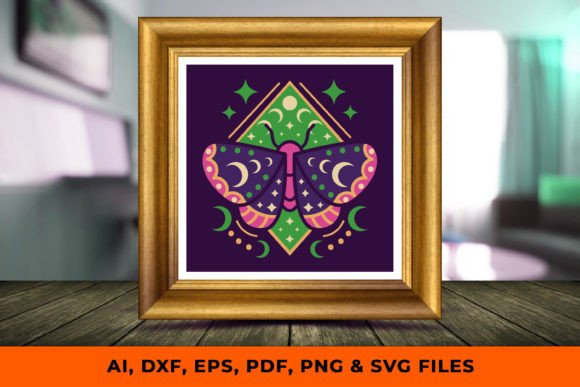
Celestial Ladybug 3D Shadow Box: A Practical Guide for Crafters and Designers
In the evolving landscape of digital crafting and home decor, the intersection of precision engineering and artistic expression has created a new category of DIY projects. Among these, the Celestial Ladybug 3D Shadow Box stands out as a compelling example of how layered paper art can transform flat digital files into tangible, depth-rich installations. For professionals, hobbyists, and small business owners alike, understanding the mechanics and potential of this specific design is essential for maximizing both creative output and commercial viability.
This article evaluates the Celestial Ladybug 3D Shadow Box not merely as a decorative item, but as a functional asset for creators. We will examine its structural integrity, the versatility of its file formats, and its applicability across various professional and personal contexts. By focusing on practical utility rather than superficial aesthetics, we aim to provide a clear picture of whether this resource aligns with your current workflow or project goals.
Understanding the Structural Design
The core appeal of any shadow box lies in its ability to manipulate light and shadow through layering. The Celestial Ladybug 3D Shadow Box utilizes a multi-tiered approach, where each layer is meticulously cut to reveal portions of the layers beneath it. This technique, often referred to as paper layering or kirigami, requires precise alignment and consistent spacing to achieve the desired three-dimensional effect.
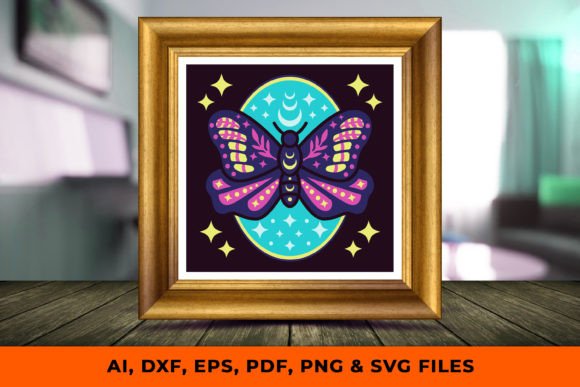
What distinguishes this particular design is its thematic fusion. The ladybug, a symbol often associated with nature and good fortune, is reimagined within a celestial context. This juxtaposition allows for a broader range of interior design applications. It is not strictly rustic nor purely modern; instead, it occupies a niche that appeals to those seeking whimsical yet sophisticated decor. The depth created by the layers adds a dynamic quality that changes depending on the viewer’s angle and the ambient lighting conditions, making it a visually engaging piece rather than a static image.
File Format Versatility and Workflow Integration
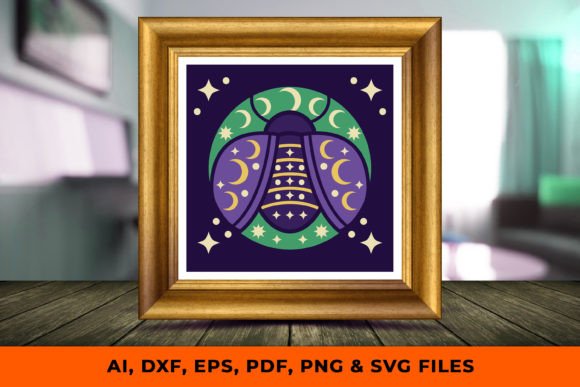
For digital creators, the value of a design asset is heavily dependent on its compatibility with existing tools. The Celestial Ladybug 3D Shadow Box package includes SVG, PNG, PDF, AI, EPS, and DXF files. This comprehensive suite ensures that users regardless of their preferred software ecosystem can utilize the design effectively.
- SVG and DXF: These vector formats are ideal for users operating cutting machines such as Cricut or Silhouette. They allow for scalable, clean cuts without pixelation, ensuring that intricate details remain sharp regardless of the final project size.
- AI and EPS: Professional graphic designers using Adobe Illustrator or CorelDRAW will find these formats essential for further customization. They enable easy manipulation of anchor points and paths, allowing for significant modifications to the original design if needed.
- PDF: This format serves as a reliable backup for manual cutting or for users who prefer to print templates directly. It preserves the layout integrity across different operating systems.
- PNG: While less useful for cutting, high-resolution PNGs are valuable for digital mockups, social media previews, or sublimation printing projects where layering is simulated rather than physical.
This flexibility reduces friction in the production process. Whether you are a freelancer delivering a custom order or a hobbyist creating a gift, the ability to work within your native software environment streamlines the transition from concept to completion.
Practical Applications and Target Audience
The Celestial Ladybug 3D Shadow Box is not a one-size-fits-all solution, but its adaptability makes it suitable for several distinct user groups. Understanding who benefits most from this asset can help determine its return on investment.
Small Business Owners and Etsy Sellers
For entrepreneurs selling handmade goods, uniqueness and production efficiency are paramount. This design offers a balance between complexity and reproducibility. Once the initial setup is complete—calibrating cut settings and selecting materials—the assembly process can be standardized. This allows for batch production, which is crucial for maintaining healthy profit margins. Furthermore, the visual impact of 3D shadow boxes performs well in online marketplaces, where high-quality photography can highlight the depth and texture of the product.
Educators and Workshop Leaders
Educators teaching design, geometry, or fine arts can use this project to demonstrate principles of spatial awareness and layering. The step-by-step assembly required for a shadow box provides a tangible lesson in planning and execution. It is particularly effective for older students or adult learners who are interested in exploring the intersection of digital design and physical craft.
Interior Design Enthusiasts
For individuals looking to personalize their living spaces, this project offers a high-end aesthetic at a fraction of the cost of commissioned art. The ability to customize colors means the piece can be tailored to match specific room palettes, whether that involves muted earth tones for a minimalist apartment or vibrant hues for a playful nursery.
Quality Considerations and Material Selection
The final outcome of the Celestial Ladybug 3D Shadow Box is heavily influenced by material choices. While the digital files provide the blueprint, the physical medium determines the perceived quality. Cardstock weight is a critical factor; typically, 65lb to 80lb cardstock offers the best balance between rigidity and ease of cutting. Lighter papers may warp or fail to hold the structural integrity required for the layered effect, while heavier boards might strain standard consumer-grade cutting machines.
Spacing is another technical consideration. To achieve the intended 3D effect, foam tape or spacers must be used between layers. Consistency in spacer thickness is vital for a professional finish. Inconsistent spacing can lead to a disjointed appearance, undermining the illusion of depth. Creators should test different spacer heights to determine which best suits the scale of their specific project.
Limitations and Realistic Expectations
While the Celestial Ladybug 3D Shadow Box is a robust design, it is important to acknowledge its limitations. First, the assembly process is time-intensive. Unlike flat prints, shadow boxes require careful alignment and adhesive application. This makes them less suitable for last-minute projects or high-volume, low-margin sales unless the pricing structure adequately reflects the labor involved.
Second, the design’s complexity may pose a challenge for beginners. Intricate cuts require well-maintained blades and precise machine calibration. Users new to digital crafting may experience frustration with weeding (the process of removing excess material) if their equipment is not properly tuned. It is recommended that novices practice with simpler designs before attempting multi-layered shadow boxes.
Finally, lighting plays a significant role in the presentation. Without adequate directional lighting, the shadows that define the 3D effect may be lost, reducing the piece to a flat collage. Creators should consider the intended display environment and potentially incorporate LED strip lights within the frame to enhance visibility and dramatic impact.
Long-Term Value and Customization Potential
One of the strongest arguments for investing in a design like the Celestial Ladybug 3D Shadow Box is its long-term utility. Unlike trend-driven graphics that may quickly become obsolete, the underlying technique of layered paper art remains a staple in the crafting community. The skills developed through assembling this project—precision cutting, layer management, and spatial planning—are transferable to other complex designs.
Moreover, the included file formats allow for extensive customization. Creators can modify color schemes to suit seasonal themes, adjust sizes for different frame dimensions, or even isolate specific elements for use in other projects. This modularity extends the lifespan of the asset, ensuring it remains a useful part of a creator’s library for years to come.
In conclusion, the Celestial Ladybug 3D Shadow Box represents a well-executed resource for those serious about digital crafting and decorative arts. Its value lies not just in the final aesthetic, but in the professional-grade flexibility it offers. By understanding the technical requirements and target applications, users can leverage this design to enhance their portfolios, streamline their production workflows, and create meaningful, high-impact decor. For those willing to invest the time in proper assembly and material selection, the result is a piece that transcends simple decoration, becoming a testament to the power of structured creativity.