Cemetery: A 3D Typeface for Dynamic Visual Impact
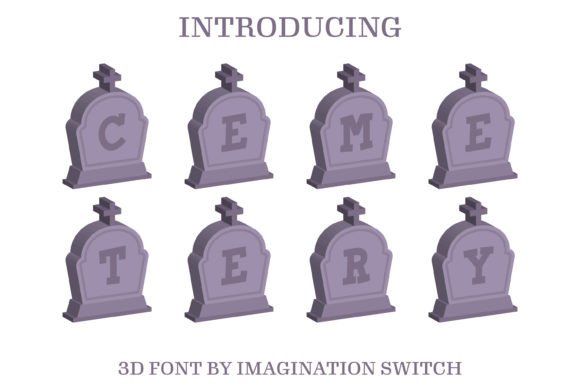
In the crowded landscape of digital typography, finding a font that balances aesthetic novelty with functional versatility is often a challenge for designers. Cemetery emerges as a distinct option in this space, offering a typographic creation that prioritizes dimension and vitality. Unlike flat, two-dimensional typefaces that rely solely on weight and spacing for impact, this font utilizes clever color application and structural design to provide an engaging and dynamic appearance. For professionals seeking to break the monotony of standard layouts, Cemetery offers a unique visual sensation through its 3D style, creating a convincing illusion of depth that can anchor a design or serve as a striking focal point.
Understanding the Design Philosophy
The core appeal of Cemetery lies in its ability to transform text from a mere informational element into a graphical asset. The font is engineered to bring life to each character, moving beyond traditional serif or sans-serif conventions. By integrating a three-dimensional perspective, it allows designers to add volume and presence to their work without the need for complex manual layering or shadow effects in post-production. This inherent depth means that the typography does the heavy lifting, providing a modern and dynamic touch that resonates with contemporary design trends favoring bold, immersive visuals.
What sets this typeface apart is not just the 3D effect itself, but how it is executed. The design avoids the cluttered look that often plagues dimensional fonts. Instead, it maintains clarity while offering a sophisticated edge. This makes it suitable for a wide array of applications where the goal is to capture attention quickly. Whether used in a headline, a logo, or a short promotional phrase, the font’s structure ensures that the message remains legible while delivering a strong visual punch.
Comprehensive Character Set and Versatility
A critical factor in evaluating any typeface is the completeness of its character set. Cemetery comes complete with a full suite of characters, including uppercase letters, lowercase letters, and numbers. This diversity is essential for professional use, as it allows for creative flexibility across various design styles. Many decorative fonts limit themselves to uppercase only, restricting their utility to short titles or logos. However, the inclusion of lowercase and numerals in Cemetery expands its potential significantly.
This comprehensive range allows designers to experiment with sentence case, mixed-case headlines, and even data-driven graphics that require numerical integration. The consistency between the different character types ensures that the 3D illusion remains uniform throughout the text, maintaining the professional quality of the final output. For marketers and content creators, this means the font can be applied to longer copy segments or complex layouts without losing its stylistic coherence.
Practical Applications in Print and Digital Media
Paired with its striking 3D design, Cemetery is suitable for various purposes across both print and digital mediums. In print design, the font excels in contexts where physical texture and depth can be emphasized. It is an excellent choice for posters, brochures, and packaging designs where standing out on a shelf or a wall is paramount. The dimensional aspect of the font can interact with printing techniques such as embossing or spot UV coating, further enhancing the tactile experience for the viewer.
In the digital realm, Cemetery provides a modern aesthetic that aligns well with current web and social media trends. Digital projects often require assets that are eye-catching yet load efficiently. Since the 3D effect is built into the font file rather than generated through heavy CSS or image overlays, it offers a streamlined workflow for web designers and social media managers. The font’s dynamic appearance helps in creating scroll-stopping graphics for Instagram, Facebook, and LinkedIn, where visual immediacy is crucial for engagement.
Technical Compatibility and Workflow Considerations
When incorporating new assets into a professional workflow, technical compatibility is a primary concern. Cemetery is designed with specific usage scenarios in mind, and understanding these distinctions is vital for a smooth design process. The font is available in different versions, each tailored for specific software environments.
The black version of this font is fully compatible with Cricut Design Space and other cutting machines. This makes it an ideal choice for crafters, small business owners creating physical merchandise, and designers working with vinyl cutters or laser engravers. The solid black outlines ensure clean cuts and precise execution, allowing the 3D illusion to be translated into physical materials effectively.
However, it is important to note that the color version of this font requires a different approach. The color variant is only compatible with certain design programs, including Adobe Photoshop, Illustrator, Silhouette Studio, and Inkscape. These programs support the advanced color layers necessary to render the 3D effect correctly. Users should be aware that the OTF and TTF files of the color version are not compatible with Cricut Design Space. Attempting to use the color version in unsupported software may result in flattened or incorrect displays, undermining the intended visual impact.
For those unfamiliar with handling multi-layered color fonts, referring to an Ultimate Font Guide is recommended. These resources typically provide step-by-step instructions on how to install, activate, and manipulate the font within supported applications. Understanding these technical nuances ensures that designers can leverage the full potential of Cemetery without encountering frustrating workflow interruptions.
Who Benefits Most from This Typeface?
Cemetery is particularly beneficial for professionals who need to create high-impact visuals with minimal effort. Graphic designers working on branding projects will find the font useful for creating memorable logos that stand out in a saturated market. Marketers and advertisers can utilize it for campaign headers that need to convey energy and modernity. Additionally, educators and publishers looking to make educational materials more engaging might use the font for chapter titles or key concepts, leveraging the depth to highlight importance.
Small business owners and entrepreneurs who handle their own marketing materials will also appreciate the font’s versatility. The ability to use the black version for physical products and the color version for digital ads provides a cohesive brand identity across different touchpoints. Freelancers and bloggers can use Cemetery to elevate the visual quality of their thumbnails and featured images, helping to attract more clicks and views.
Evaluating Long-Term Value and Usability
The long-term value of Cemetery lies in its adaptability and timeless appeal of 3D typography. While design trends shift, the desire for depth and dimension in visual communication remains constant. By investing in a font that handles this complexity internally, designers save time and maintain consistency across projects. The robust character set ensures that the font remains useful as project requirements evolve, preventing the need to purchase additional complementary typefaces.
Usability is further enhanced by the clear distinction between the black and color versions. This separation allows users to choose the right tool for the job, whether they are preparing a file for a industrial cutter or a high-resolution digital display. The reliability of the font in supported programs means that designers can trust the output, reducing the need for extensive troubleshooting or manual adjustments.
In conclusion, Cemetery represents a thoughtful addition to any designer’s toolkit. It combines aesthetic innovation with practical functionality, offering a solution for those looking to add depth and vitality to their typographic choices. By understanding its technical requirements and leveraging its strengths in both print and digital contexts, professionals can create compelling, dynamic designs that resonate with their audience. For anyone seeking to elevate their visual communication with a modern, dimensional edge, this font offers a reliable and effective resource.