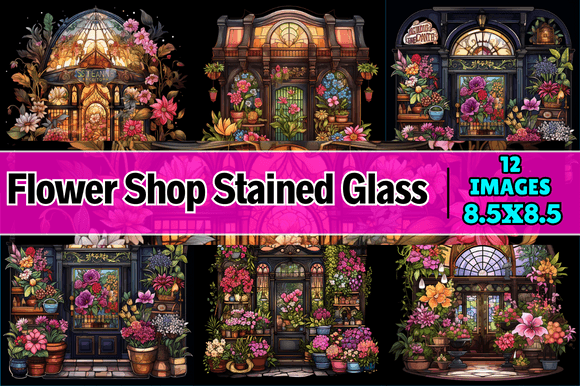
Flower Shop Stained Glass: A Guide to High-Quality Digital Design Assets
The intersection of traditional craftsmanship and modern digital design offers a unique opportunity for creators. Flower Shop Stained Glass designs capture the intricate beauty of botanical motifs rendered in the vibrant, segmented style of classic stained glass windows. For digital artists, crafters, and small business owners, these assets provide a versatile foundation for a wide array of projects. However, the ease of downloading digital files often leads to overlooked details regarding resolution, format compatibility, and intended use. Understanding the nuances of these digital packs is essential for achieving professional results.
Understanding the Value of Digital Stained Glass Artwork
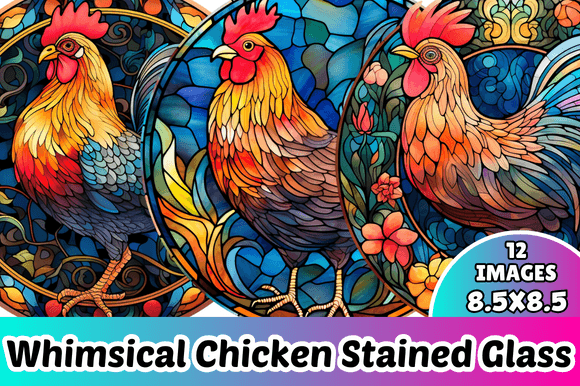
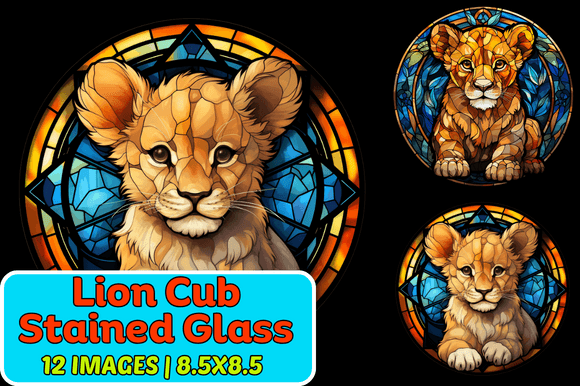
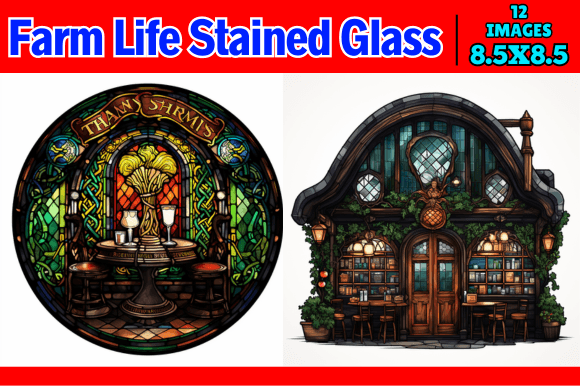
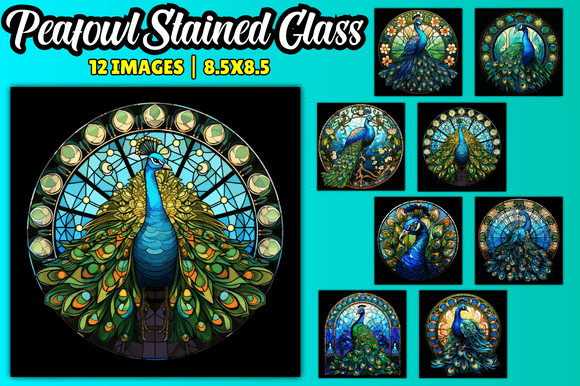
Digital stained glass illustrations are not merely decorative; they are functional design elements. A high-quality pack, such as one featuring Flower Shop Stained Glass, typically includes HD images in both PNG and PDF formats. These files are designed to be versatile, supporting projects ranging from gift wrapping and greeting cards to acrylic tumbler wraps and wall art. The appeal lies in the pre-designed complexity. Creating a realistic stained glass effect from scratch requires significant skill in layering, opacity adjustments, and color theory. By utilizing a curated collection, creators can bypass the initial design phase and focus on application and customization.
The inclusion of 8.5” x 8.5” square formats is particularly strategic. This dimension is ideal for social media content, coaster designs, and specific print-on-demand products. When evaluating a Stained Glass Bundle, it is crucial to recognize that the value extends beyond the aesthetic. It includes the time saved in sourcing individual elements and the assurance of cohesive styling across multiple graphics.
Common Mistakes in Selecting and Using Digital Assets
Despite the availability of high-quality resources, many users encounter issues due to fundamental misunderstandings about digital file types and resolution requirements. Avoiding these pitfalls can significantly enhance the quality of your final product.
Ignoring Resolution and DPI Requirements
One of the most frequent errors is assuming that all "HD" images are suitable for large-format printing. A image that looks crisp on a smartphone screen may appear pixelated when printed on a mug or a poster. For physical products like Straight Tumbler Wrap Png or wall art, a resolution of 300 DPI (dots per inch) is standard. If a Stained Glass Digital Paper or clipart is provided at 72 DPI, it is intended for web use only. Using low-resolution files for print results in blurry edges and a lack of detail, undermining the intricate nature of stained glass designs.
Better Approach: Always verify the DPI before starting a project. If the product description specifies "High quality" and "Printable," ensure the file dimensions support your intended output size. For an 8.5” x 8.5” print, the pixel dimensions should be at least 2550 x 2550 pixels.
Misunderstanding File Format Capabilities
Creators often download PNG files without realizing the limitations or advantages compared to SVG or PDF formats. PNGs are raster images, meaning they are made of pixels. They are excellent for complex textures and gradients, such as those found in Stained Glass Mosaic or Stained Glass Texture designs. However, they cannot be scaled infinitely without loss of quality. Conversely, SVG (Scalable Vector Graphics) files are vector-based, allowing for infinite scaling. If a bundle includes Stained Glass Svg files, these are ideal for cutting machines like Cricut or Silhouette, where clean lines are necessary for vinyl cuts.
Better Approach: Use PNGs for sublimation printing, digital planners, and web graphics where color depth is priority. Use SVGs for die-cutting, vinyl decals, and laser cutting. PDFs are best for direct printing of stationery, invitations, or scrapbook pages where layout preservation is key.
Overlooking Color Profiles and Transparency
Stained glass designs rely heavily on transparency and layering. A common mistake is using files with white backgrounds instead of transparent ones. When placing a Stained Glass Overlay or Stained Glass Border onto a colored background, a white box around the image will ruin the composition. High-quality Stained Glass Clipart should have a transparent background, allowing the design to blend seamlessly with underlying textures or colors.
Additionally, color profiles matter. Screens display colors in RGB (Red, Green, Blue), while printers use CMYK (Cyan, Magenta, Yellow, Key/Black). Vibrant neon hues seen on a monitor may print duller if not properly converted. While most digital packs are provided in RGB for versatility, being aware of this shift helps in adjusting expectations and making minor edits before printing.
Practical Applications and Creative Integration
The versatility of Flower Shop Stained Glass assets allows for diverse creative applications. Here is how to maximize their potential across different mediums.
- Sublimation Printing: For mugs and tumblers, use the high-resolution PNGs. Ensure the design is mirrored before printing if required by your sublimation process. The 3d Tumbler Wrap format ensures the design covers the curved surface without distortion.
- Digital Planning: Incorporate Stained Glass Digital Paper into digital planners. Use the transparent PNGs as decorative headers or section dividers. The colorful design adds visual interest without overwhelming the text.
- Scrapbooking and Stationery: Utilize the PDF formats for easy printing of greeting cards and invitations. The Stained Glass Pattern Collection can serve as background layers, adding depth to handmade cards.
- Wall Art and Decor: Scale the HD images for canvas prints or framed posters. The Stained Glass Window aesthetic brings a touch of classical elegance to modern home decor.
Evaluating Quality Before Purchase
Before committing to a Stained Glass Pack, consider the following checklist to ensure it meets your needs:
- Check Sample Images: Look for zoomed-in views to assess line clarity and color blending. Poorly defined lines can look messy when printed.
- Verify Format Inclusion: Ensure the bundle includes the formats you need (PNG, PDF, SVG). A comprehensive Stained Glass Design Kit should offer multiple options.
- Review Licensing Terms: Understand whether the license allows for commercial use. If you plan to sell items featuring the Stained Glass Artwork, confirm that the creator permits commercial redistribution.
- Assess Cohesion: A good bundle features a consistent style. Mixing disparate Stained Glass Illustrations from different sources can result in a disjointed final product.
Enhancing Your Designs with Layering Techniques
To truly elevate your projects, do not simply place the Stained Glass Elements on a flat background. Experiment with layering. Place a Stained Glass Background behind a photo, adjusting the opacity to create a subtle, textured effect. Use Stained Glass Borders to frame text in invitations, adding a touch of sophistication. For digital products like e-books or presentations, use Stained Glass Graphics as chapter headers or section breaks.
Remember, the goal is to integrate the art seamlessly. Whether you are creating a Stained Glass Suncatcher simulation for a digital mockup or designing a physical Stained Glass Ornament, attention to detail in placement and scaling will distinguish amateur efforts from professional-grade designs.
By approaching Flower Shop Stained Glass assets with a clear understanding of technical requirements and creative possibilities, you can avoid common pitfalls and produce high-quality, visually stunning projects. The right preparation and knowledge transform simple digital downloads into powerful tools for artistic expression and commercial success.